

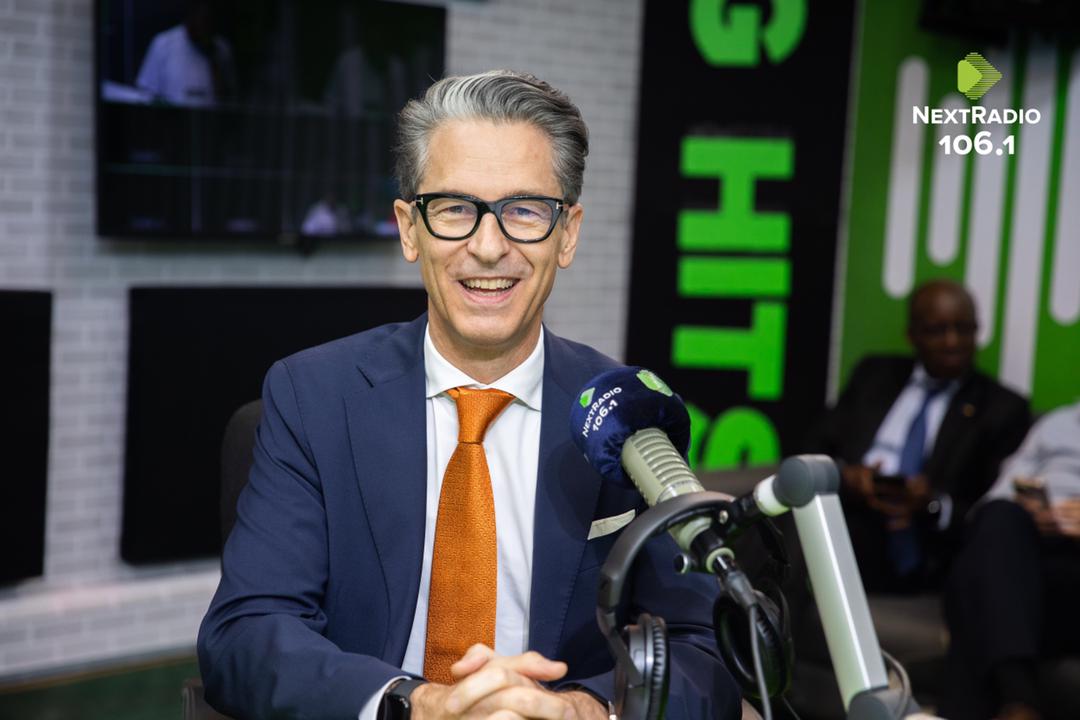
From a childhood in the historic Baltic Sea city of Kalmar to representing Europe in Kampala, European Union Ambassador Jan Sadek blends personal warmth with diplomatic focus in advancing EU–Uganda relations.
Speaking during an appearance on Next Radio’s Morning Switch, Sadek described himself as “a bit of a coffee addict”—a fitting remark given Uganda’s standing as a global coffee producer. He encouraged the country to further capitalise on rising international demand, particularly within European markets.
Sadek noted that Uganda already enjoys a trade surplus with the European Union, with exports such as coffee and fresh produce entering the EU market largely tariff-free under existing trade arrangements. Beyond coffee, he pointed to Uganda’s pineapples as among “the best in the world,” highlighting significant untapped potential in fruit and vegetable exports—provided quality standards and logistics are maintained.
The EU–Uganda partnership has evolved significantly since 1976, when the EU established its first delegation office in Kampala. At the time, the bloc consisted of just nine member states. Today, it has expanded to 27, with deeper economic and political integration.
Over the past five decades, the relationship has shifted from a development aid model to a broader partnership centred on trade, investment, and sustainability. The EU has invested more than €5 billion in Uganda, supporting infrastructure projects such as the Northern Bypass, strengthening agricultural value chains, and contributing to post-conflict recovery in Northern Uganda.
Environmental conservation remains a key pillar of EU support. Sadek highlighted a €50 million investment in forest protection, stressing the economic and ecological importance of preserving Uganda’s natural resources for tourism and sustainable timber production. Referencing themes from Ekibira, he underscored the urgency of tackling deforestation and promoting reforestation efforts.
The EU is also supporting Uganda’s transition to renewable energy through investments in hydropower rehabilitation, solar expansion, and rural electrification. Projects include upgrades to the Kiira Power Station and Nalubaale Power Station, alongside last-mile connectivity initiatives aimed at increasing electricity access in underserved communities.
Beyond policy, Sadek has embraced Uganda’s tourism offerings. He recounted experiences trekking gorillas in Bwindi Impenetrable National Park, cycling through Lake Mburo National Park, and travelling to Kidepo Valley National Park—which he described as “true wilderness.”
In a lighter moment, Sadek joked about adopting Uganda’s relaxed approach to timekeeping, saying it is one way he has become “a bit Ugandan,” reflecting his connection to the local culture.
Looking ahead, he identified opportunities beyond traditional sectors, particularly in Uganda’s creative industries. With growing talent in film and storytelling, Sadek believes Uganda can expand its exports beyond goods to include culture and content for European audiences.
For Sadek, the EU–Uganda relationship is no longer defined by aid, but by partnership—driven by shared interests in trade, sustainability, and people-to-people connections.
